A practical look at exam preparation, blueprint coverage, practice questions, and how to identify gaps before exam day.
Understanding the Scope of SCOR v2.0
The current Cisco 350-701 SCOR v2.0 exam became effective on August 27, 2026, replacing the previous v1.1 blueprint. Cisco retained the 120-minute exam format, but the updated objectives reflect a broader security environment. Candidates now need to account for network security, cloud security, Secure Service Edge, endpoint protection, and network access technologies within one exam.
The six domains have different weightings:
| Exam domain | Weight |
| Security Concepts | 20% |
| Network Security | 25% |
| Cloud Security | 15% |
| Secure Service Edge | 10% |
| Endpoint Protection and Detection | 15% |
| Network Access, Visibility, and Enforcement | 15% |
Network Security carries the largest individual weighting, but the other five domains account for 75% of the exam. That distribution has a practical consequence: spending most of your preparation time on firewalls, VPNs, and traditional network protection can leave substantial gaps elsewhere.
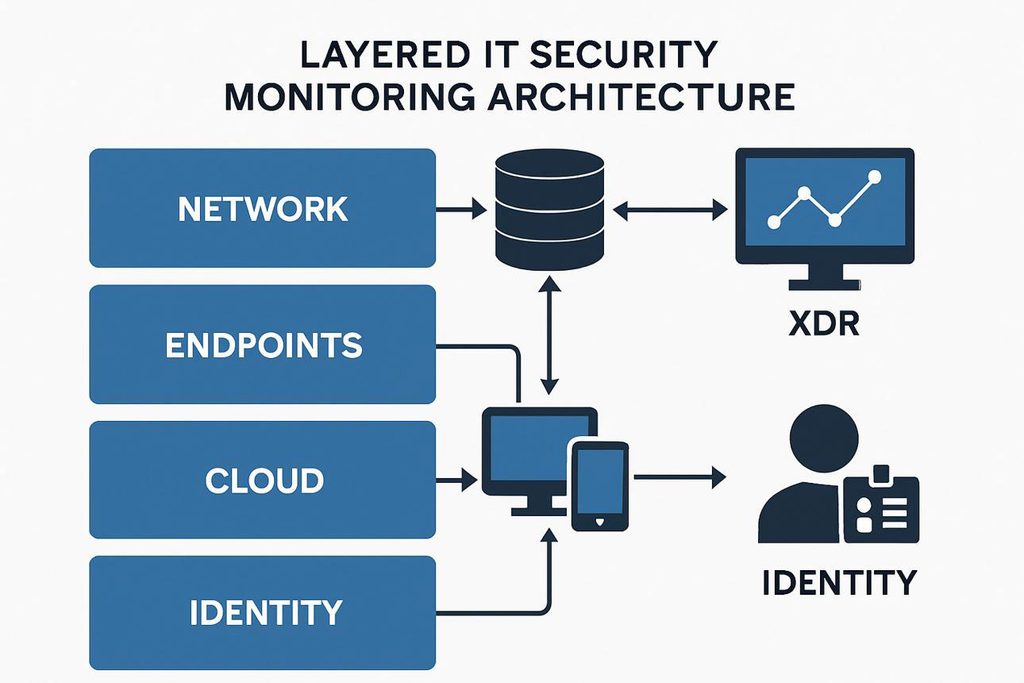
The expanded scope also changes what candidates should expect from their study materials. AI and large language model vulnerabilities, post-quantum cryptography, multicloud defense, eBPF, and Secure Service Edge now form part of the wider knowledge landscape. Cisco Duo, Cisco XDR, Splunk, Secure Endpoint, and Identity Services Engine also deserve attention within their respective objectives.
This is particularly relevant to candidates who began studying with older SCOR resources. Some foundational networking and security knowledge remains useful, but an older question bank cannot automatically be considered suitable for v2.0. Cisco itself describes the revision as new content rather than a minor refresh.
Knowing the Technology Is Not the Same as Being Ready
One of the more difficult parts of preparing for SCOR is understanding how different security technologies work together.
Take Cisco Secure Firewall Threat Defense (FTD) and Firewall Management Center (FMC). A candidate might recognize their names, understand their general roles, and remember several configuration concepts. That familiarity is a reasonable starting point. Exam preparation needs to go further: candidates should understand deployment models, policy management, monitoring, and how firewall capabilities fit into a broader security architecture.
The same distinction applies to Cisco Secure Access. Knowing that it belongs to the Secure Service Edge domain does not establish whether you understand its role in protecting users and access to applications. The candidate needs to connect the product’s purpose with the security requirements described by the relevant exam objectives.
Identity and endpoint technologies create another layer of complexity. Cisco ISE, Duo, and Secure Endpoint address different parts of the security environment. They should not become interchangeable names in a candidate’s notes.
Consider a remote employee accessing a business application. Identity verification, endpoint security posture, access policy, and network enforcement can all influence the resulting security decision. Understanding the individual products is useful, but recognizing how their responsibilities differ is what makes the knowledge transferable.
Visibility and detection deserve similar attention. Cisco XDR and Splunk are relevant to security monitoring and investigation workflows. A candidate should understand the purpose of collecting and interpreting security information, how different sources contribute to visibility, and where these tools fit within a wider detection and response process.
The challenge is retaining these distinctions across several domains. A candidate might perform consistently on traditional firewall questions but struggle when practice moves into cloud protection, AI security, or identity-based access. This unevenness can remain hidden if preparation relies on familiar topics.
A useful way to evaluate progress is to ask three questions about each major technology:
- Can I explain what problem it addresses?
- Can I distinguish its responsibilities from those of related technologies?
- Can I apply that understanding to a security scenario I have not studied before?
If the answer to the first question is yes but the others are uncertain, the subject probably needs more review.
What Good 350-701 Practice Questions Should Help You Identify
Practice questions are most useful when they reveal something about your preparation that you did not already know.
A high score can be encouraging, but it is only meaningful when the questions reflect the current exam objectives and cover a sufficiently broad range of subjects. Repeating familiar questions may improve recognition without improving your ability to handle unfamiliar situations.
For Cisco 350-701 practice questions, coverage should be the first consideration. Check whether the material addresses all six v2.0 domains, including the newer Secure Service Edge objectives. A resource that concentrates heavily on traditional network security may give you a misleading impression of readiness.
The explanations matter just as much as the questions. When you select an incorrect answer, you should be able to identify the misunderstanding behind the mistake. Perhaps you confused two technologies, overlooked an important security requirement, or remembered a product’s purpose without understanding its practical application.
Good explanations should make those distinctions clear. Simply displaying the correct answer provides limited learning value.
There are several useful ways to evaluate a practice resource:
| What to evaluate | What to look for |
| Blueprint coverage | All six current v2.0 domains |
| Technical relevance | Subjects aligned with published Cisco objectives |
| Answer explanations | Clear reasoning behind correct and incorrect choices |
| Topic variety | Questions covering different security technologies |
| Weak-area identification | A practical way to recognize recurring knowledge gaps |
| Version relevance | Explicit alignment with SCOR v2.0 |
Candidates looking for additional practice can review Passapply 350-701 Exam Prep materials. Before choosing, examine the available demo and compare its subject coverage and explanations with Cisco’s official v2.0 exam topics. This gives you an opportunity to assess whether the material addresses areas where your existing preparation needs reinforcement.
One important distinction: third-party practice questions should be treated as learning and self-assessment resources, not as guaranteed representations of Cisco’s live exam questions. Their value depends on the quality of their explanations, their alignment with the current blueprint, and how effectively you use them to identify gaps.

Build a More Useful Review Routine
A practical review routine should help you move from recognizing answers to understanding the underlying technologies. You do not need an elaborate study schedule to make that process more effective. You need a consistent way to identify weaknesses and revisit them.
A useful approach is to work through six steps:
1. Start with the official blueprint. Download the Cisco 350-701 SCOR v2.0 exam topics. Use its domain structure to check whether your existing study resources cover the current objectives.
2. Practice across different domains. Avoid completing large numbers of questions from only one familiar subject. Include network security, cloud security, endpoint protection, identity, and Secure Service Edge in your review.
3. Keep a record of mistakes. Record the topic, the reason for your incorrect answer, and what you need to understand better. This is more useful than maintaining a simple count of correct answers.
4. Return to the original learning material. When a question exposes a gap, revisit the relevant Cisco documentation, training material, or technical explanation. Understand the subject before attempting similar questions again.
5. Revisit previously incorrect questions. Give yourself enough time between attempts to check whether you have retained the knowledge. Remembering an answer immediately after reading its explanation is not the same as understanding the topic.
6. Introduce timed practice. The 350-701 exam lasts 120 minutes. Timed sessions can help you assess how consistently you work through different subjects under exam conditions.
Pay particular attention to recurring mistakes. If you repeatedly struggle with identity technologies or cloud security, those subjects deserve additional attention even if your overall practice score looks reasonable.
Your review routine should gradually become more focused. Early practice helps identify unfamiliar subjects; later practice should demonstrate whether those weaknesses have actually improved.
Conclusion
Preparing for Cisco 350-701 SCOR v2.0 requires a reliable understanding of several interconnected security domains. The number of completed practice questions offers little evidence of readiness unless you can explain your answers, recognize differences between technologies, and maintain consistent performance across the current blueprint.
Use the official objectives as your reference point, choose practice materials that genuinely cover them, and pay attention to the subjects you repeatedly get wrong.